Somewhere beneath the streets of your city, a pipe is failing. It may be a cast-iron main installed during the Eisenhower administration, corroded and thinning under the weight of traffic above it. It may be a lead service line laid before World War II, slowly leaching toxins into water that someone’s child is about to drink. It may be a joint that’s been seeping for years, unreported, quietly surrendering pressure into the soil below a suburb that has no idea the loss is happening. The American Society of Civil Engineers estimates that a water main breaks somewhere in the United States every two minutes, and that the country loses an estimated 6 billion gallons of treated water to leakage every single day. That is water that was already extracted from a source, pumped through a treatment facility, filtered, disinfected, and pressurized for delivery, only to vanish underground before it reaches anyone.
This is the condition of the country’s water infrastructure in 2026, and it was a serious problem long before the AI boom placed a new and extraordinary demand on the same finite supply.
A System That Was Never Designed to Last This Long
The pipes carrying drinking water across the United States weren’t engineered for the 21st century. Most of them were laid between the 1900s and 1950s, built to last 75 to 100 years, and are now either at or well past the end of their designed service lives. The average water network pipe in the United States is approximately 45 years old, according to the American Council for an Energy-Efficient Economy, and cast-iron mains in at least 600 towns and counties are over a century old. More than 2 million miles of underground pipes serve roughly 150,000 public water systems, reaching more than 90 percent of the country’s population, according to the ASCE. Those pipes are being replaced at an average rate of just 0.5 percent per year, which, as the American Water Works Association has noted, means the full renewal of the national system would take roughly two centuries at current investment rates and cost somewhere in the neighborhood of $1 trillion.
The ASCE graded America’s drinking water infrastructure a C-minus in its 2025 Infrastructure Report Card, the same score it received in 2021, unchanged across four years of nominal investment. Wastewater infrastructure fared worse, earning a D-plus. “Our nation’s water infrastructure is aging and underfunded,” said Carol Haddock, vice chair of the ASCE’s report card committee. The EPA has determined that the nation’s water infrastructure needs stand at $625 billion over the next 20 years, a figure that exceeds the agency’s own 2018 assessment by more than $150 billion. If the current funding gap goes unaddressed, ASCE projects it could balloon to more than $690 billion by 2044.
The Hidden Costs of Water That Never Arrives
The 6 billion daily gallons lost to leakage represent more than a supply problem. They represent an energy problem, an economic problem, and a compounding liability that grows more expensive with every year it goes unaddressed. Water and wastewater systems consume approximately 2 to 4 percent of all electricity used in the United States, generating over 45 million tons of greenhouse gases annually, according to the EPA. For many municipal governments, drinking water and wastewater plants are the single largest energy consumers within city operations, accounting for 30 to 40 percent of total municipal energy use. As much as 40 percent of a water system’s operating costs can be attributed to energy alone, according to EPA guidance. Every gallon that disappears through a cracked main or a failing joint before it reaches its destination represents energy that was consumed to produce it and then delivered to nothing.
This isn’t an abstract accounting problem. When a system is leaking at the scale the United States currently is, the energy required to compensate for that loss forces treatment plants and pumping stations to work harder than they’d need to if the infrastructure were intact. Aging pump equipment operates below peak efficiency. Pressure maintenance in deteriorating distribution networks requires continuous overcorrection. The cumulative energy waste embedded in an underinvested water system is significant, and it’s a problem that compounds in the same way the infrastructure itself deteriorates: gradually, then all at once.
What’s in the Water Nobody Is Talking About
The question of what the country’s aging pipes are carrying, not just losing, is equally urgent. The EPA estimates there are approximately 9.2 million lead service lines currently delivering drinking water to homes across the United States, a figure confirmed by the agency’s 2021 Drinking Water Infrastructure Needs Survey. Lead was banned from use in new plumbing in 1986, but its legacy infrastructure remains in place in every state. Research published by the University of Wisconsin’s La Follette School of Public Affairs found that lead pipe installation in the early 20th century may account for as many as 2.17 million years of life lost across the United States, reducing longevity in exposed communities by an average of 2.7 months for those whose exposure began in utero.
The Flint, Michigan water crisis made the lead pipe problem briefly national news, but the underlying infrastructure conditions that produced Flint were never unique to Flint. They were just more visible there. When aging pipes corrode, when water chemistry shifts, when the protective mineral coating that lines old pipes is disturbed, lead and other heavy metals migrate into the water supply with no detectable color, taste, or odor. The EPA notes that no known level of lead exposure is without health consequences, with children being the most vulnerable population. More than 5,000 water systems serving roughly 18 million people were found to be in violation of EPA lead rules in a 2016 investigation by CNN. The infrastructure that allowed those violations wasn’t a Flint problem. It was a national one.
Resilience Planning in a Warming Climate
Water infrastructure doesn’t operate in a static environment, and the stresses bearing down on it in 2026 are more varied and intense than the engineers who designed most of it ever anticipated. The ASCE’s 2025 report marks a notable shift in emphasis from sustainability to resilience, the recognition that the question is no longer only how to build systems that last, but how to build systems that withstand increasingly hostile conditions and recover when they fail. Intensifying drought cycles, earlier and lower snowpack peaks, more powerful precipitation events, and rising temperatures all affect both the supply side and the distribution infrastructure of water systems.
“Every American household or business immediately feels the impact of just one inefficiency or failure in our built environment,” said Darren Olson, chair of the 2025 ASCE Report Card. The problem with infrastructure failure isn’t always the dramatic rupture. More often it’s the slow accumulation of deferred maintenance decisions, each one individually defensible, collectively catastrophic. A pipe that isn’t replaced at 80 years isn’t safely waiting at 90. It’s a liability that becomes more expensive to manage with each passing season and more likely to fail at the worst possible moment.
The Intersection of Water Sustainability and AI Data Centers
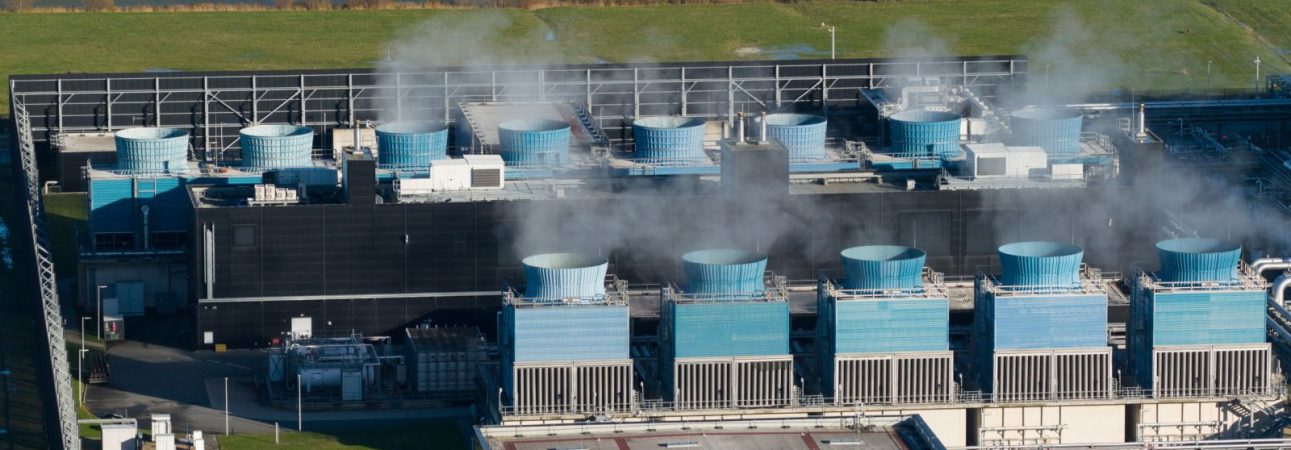
Into this already strained picture, add a demand that barely existed a decade ago. Data centers, the physical infrastructure that powers cloud computing, artificial intelligence, and every search query, streaming request, and AI chat session conducted anywhere in the country, are enormous consumers of water. The cooling systems that keep server banks from overheating draw from municipal water supplies, aquifers, and in some cases directly from rivers, in volumes that were simply not a factor in water supply planning at the scale they represent today.
A 2024 report from the Lawrence Berkeley National Laboratory estimated that U.S. data centers consumed 17 billion gallons of water directly through cooling in 2023, and projected that by 2028, those figures could double or even quadruple as AI-focused infrastructure continues to expand. The Brookings Institution has noted that a typical data center consumes 300,000 gallons of water per day, roughly the same as 1,000 households, while large facilities can consume up to 5 million gallons daily, equivalent to the water needs of a town of up to 50,000 people. Google reported consuming 6.1 billion gallons of water across its data centers in 2023, and a single Google facility in Council Bluffs, Iowa, consumed approximately 1 billion gallons in 2024 alone, enough to supply all Iowa residential water users for five days. A study by the Houston Advanced Research Center projected that data centers in Texas will use 49 billion gallons of water in 2025 and as much as 399 billion gallons annually by 2030.
Wherever you stand on the broader AI debate, the water consumption tied to data center infrastructure is a concrete, measurable problem that operates entirely independently of any policy position. What makes it urgent isn’t just the volume. It’s where that volume is being drawn from. Consider Colorado, where data center construction along the Front Range is accelerating into a water supply picture that is already in crisis. In April 2026, Denver Water began physically draining the Antero Reservoir, a 100-mile drive southwest of the city, and moving its water into a different reservoir to reduce evaporation losses. The utility declared a Stage 1 drought and asked customers to cut use by 20 percent, the fifth such drought declaration since 2000. The reason is snowpack, or more precisely, the near-total absence of it: the 2025 to 2026 winter snowpack across Denver Water’s two primary watersheds reached just 55 percent of normal in the Colorado River Basin, the worst level on record, and 42 percent in the South Platte Basin, also a record low. “Denver Water depends on mountain snowpack for its water supply, and this winter was unusually warm and did not deliver the snow we need,” said Alan Salazar, Denver Water’s CEO. “This drought is also a reminder of the impacts of climate change on our water supply.” Denver Water’s reservoir storage sat at approximately 47 percent of seasonal target as of May 2026. The Colorado River, which supplies roughly half of Denver’s total water, is under sustained pressure from overallocation and consecutive dry years, with water shortages rippling from Denver to Las Vegas along the same overtaxed system.
That is the supply context into which new industrial water demand is arriving. In Newton County, Georgia, Meta’s data center was permitted to use over 500,000 gallons of water daily, with residents reporting lower water pressure as a result. In Minnesota, data center operations have been linked to lowered groundwater levels in surrounding areas. The overlap between where data center development is occurring and where water stress is already acute is not coincidental. It’s a function of land availability and energy access, two factors that frequently colocate with water-constrained regions. The communities being asked to take shorter showers are, in many cases, drawing from the same aquifers and river systems as the facilities processing their queries.
The Infrastructure Underneath the Infrastructure
The compounding nature of these pressures, aging distribution systems losing billions of gallons per day, a warming climate reducing mountain snowpack, and an entirely new category of industrial water demand surging into already-stressed supply chains, creates a system under stress from every direction simultaneously. Resilience planning for water infrastructure in this environment isn’t a long-term theoretical exercise. It’s an operational need with a near-term deadline.
Strong water infrastructure engineering requires integrating all of these pressures into a coherent picture: condition assessments of aging distribution infrastructure, energy efficiency analysis of pumping and treatment systems, hydrologic modeling that accounts for shifting snowpack and precipitation patterns, and long-term planning that positions communities to manage demand before scarcity forces the decision. The American Society of Civil Engineers recommends that utilities bolster asset management programs, invest in emerging technology, and increase collaboration among utilities, researchers, and regulators. The EPA has made clear that funding alone won’t solve a problem this structural; the engineering frameworks that translate investment into resilient, efficient, sustainable systems are where the work actually gets done.
The pipe beneath your street was probably laid before your parents were born. The server cooling your AI query may be drawing from the same aquifer your town depends on. These systems were never designed to coexist, but they do now, and the question of how they’re managed together will define whether American cities have the water they need for the next century.